Employee rewards versus recognition: what each one does
Ed is Head of Marketing at GoJoe, helping grow the businesses globally as well as working with clients to support internal engagement.
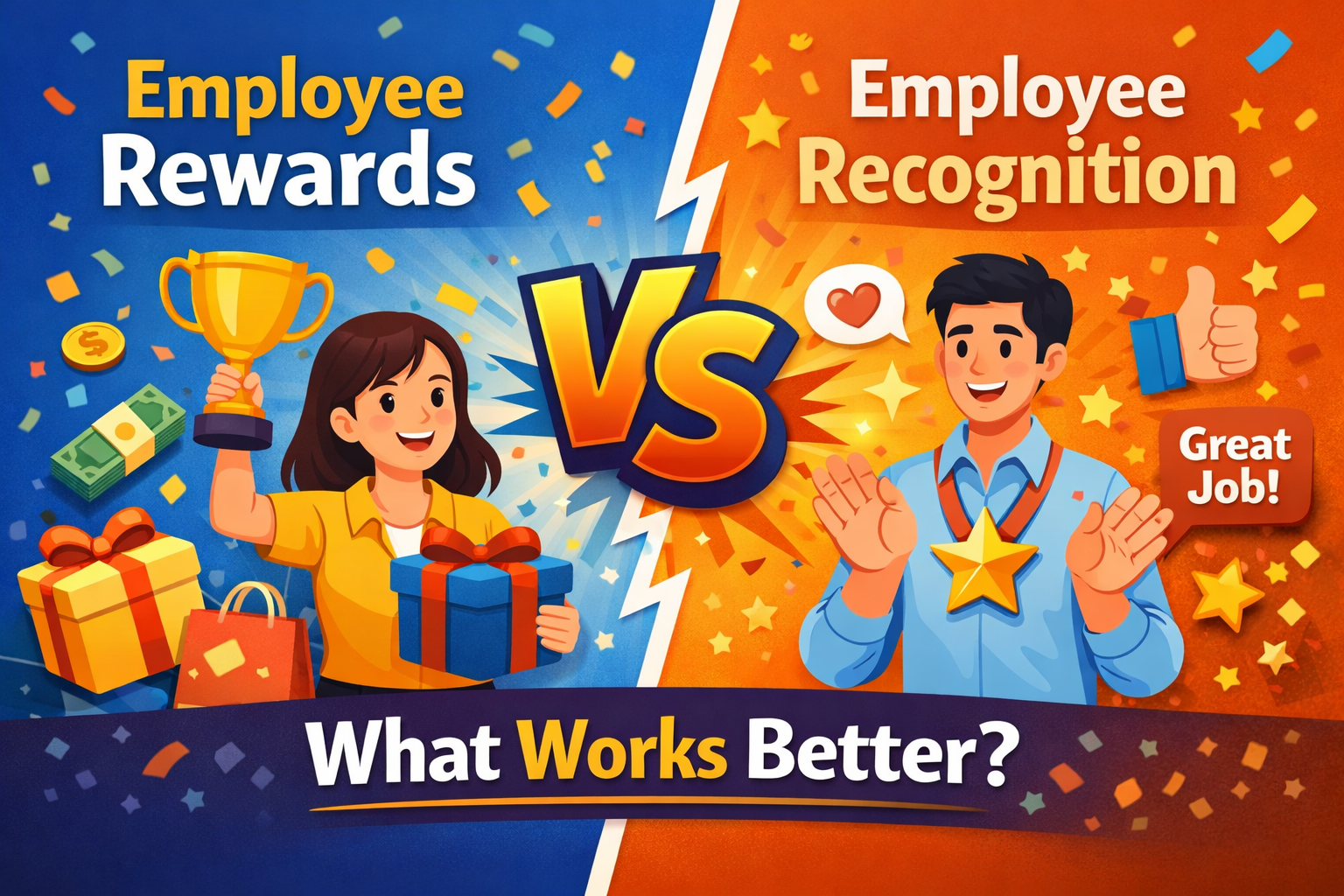
Employee rewards and employee recognition are different tools, and confusing them is one of the commonest reasons programs underdeliver. Rewards are tangible: points, credit, vouchers or experiences tied to a specific behavior. Recognition is the acknowledgement that makes effort visible: praise, a mention in front of peers, a thank-you from a manager. Rewards drive consistent behavior across a population; recognition builds belonging. Either on its own fades, and the programs that work use both for what each does.
Why rewards without recognition fall short
A reward that arrives without anyone noticing the effort behind it becomes a transaction. Employees learn the rules, collect the points, and feel no more valued than before. The behavior continues only as long as the reward does.
Why recognition without rewards is incomplete
Praise is powerful and free, and it is inconsistently given. Some managers do it naturally; many go months without a word. Recognition on its own depends on individual habit, which is why it is uneven across any large organization, and it does not by itself move the behaviors an employer most wants to change, such as taking part in a health program.
When to use which
Use rewards for behaviors you want repeated across a whole workforce: challenge participation, health assessments, screenings, benefit use. Make them behavior-based so every employee can earn them, and keep them close to the action. Use recognition for effort and contribution, in the moment, from managers and peers, with a format that makes it visible: a team feed, a leaderboard scored on consistency, a mention in a meeting.
How to combine them
Put both in one place. In GoJoe, incentives and credits reward specific healthy behaviors, redeemable through a catalog of 100,000+ brands and rewards, with budgets and rules by country. Recognition sits alongside: spot points managers and peers can award, years of service, and team challenges that make everyone's effort visible to their colleagues. GoJoe achieves 80 to 90 percent average engagement in organizational challenges, and more than 82 percent of employees feel more socially connected after using GoJoe. Rewards are the mechanism; a healthier, more connected workforce is the point.
Frequently asked questions
What is the difference between employee rewards and recognition?
Rewards are tangible: points, credit, vouchers or experiences tied to a specific behavior. Recognition is the acknowledgement that makes effort visible: praise, a mention in front of peers, a thank-you from a manager.
Which drives better outcomes?
Together. Rewards drive consistent behavior; recognition builds belonging. Either on its own fades.
When should you use rewards and when recognition?
Rewards for behaviors you want repeated across a population, such as challenge participation or health actions. Recognition for effort and contribution, in the moment, from managers and peers.
See incentives, rewards and recognition in GoJoe, or book a demo.