What Happens After a Workplace Fitness Challenge?
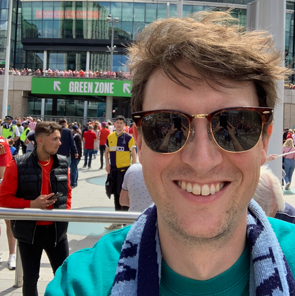
Ed is Head of Marketing at GoJoe, helping grow the businesses globally as well as working with clients to support internal engagement.
After a GoJoe challenge, employees retain access to a year-round platform with team leagues, training advice and content, ongoing activity tracking, and (where enabled) continuous move-to-earn rewards. 1 in 3 previously inactive users convert challenge activity into a long-term habit. Most GoJoe employers run multiple challenges per year, creating a cycle of reactivation rather than a one-off event. NatWest Group reported a 10% reduction in absenteeism costs in the first 18 months of using GoJoe — an outcome that accrues across multiple challenge cycles, not from a single event.
First: What Challenges Actually Do
GoJoe challenges are team-based fitness events — step challenges, activity minute challenges, sport-specific events — run through the GoJoe app over a defined period (typically 4–12 weeks). Employees join teams, log activity via the app, wearables, or manual entry, and compete against colleagues.
The outcomes during a challenge are well-documented in GoJoe's platform data:
- 90%+ average participation during challenge periods
- 3 in 4 inactive employees exceed WHO weekly exercise guidance during a challenge
- Average activity increases of 400–600% for previously inactive participants
What the Data Says About Habit Formation
1 in 3 inactive users who engage with a GoJoe challenge convert the activity into a long-term habit beyond the challenge.
That's not a self-reported figure or a survey response. It's drawn from GoJoe's activity data — employees who were classified as inactive before the challenge and whose activity logs show sustained engagement after it.
The Year-Round Platform
Ongoing Challenges
Most GoJoe employers run multiple challenges per year — seasonal or themed events that maintain a cycle of activation. A January step challenge. A summer sports event. A mental health awareness week challenge in May. Each one re-activates the population, including employees who dipped in between.
Team Leagues and Social Features
Between formal challenges, GoJoe maintains team leagues where employees can track activity and compete informally. The social layer — the "buzz in the office" that HR leaders consistently identify as GoJoe's most visible cultural impact — doesn't require a formal challenge to function and automatically rolls over each month.
Move-to-Earn Rewards (Year-Round)
If the employer has switched on GoJoe's move-to-earn rewards, the incentive is continuous — not just during challenges. Employees earn points for activity throughout the year, redeemable against vouchers across 9,000+ brands. The reward keeps the behavioural trigger in place between challenge events.
Train With GoJoe
GoJoe has hundreds of in-app and ready to stream expert content to support everyday training for both body and mind. These include over 350 workouts from Les Mills, which feature 30% dedicated to beginners, guided meditation sessions with House of Wellbeing, and expert wellbeing sessions on all areas of preventative health from financial to family.
Bupa Partnership
GoJoe's partnership with Bupa extends the platform beyond activity tracking into connected health. Employees can access Bupa's health services alongside their GoJoe activity data — keeping the preventative health journey connected to actual care.
The Longer-Term Picture: NatWest
NatWest Group reported a 10% reduction in absenteeism costs in the first 18 months of using GoJoe.
Absenteeism reduction is a lagging indicator — you don't see it from a single challenge. You see it from sustained engagement across multiple challenge cycles, with year-round rewards and a social infrastructure that makes physical activity part of how the company operates.
Frequently Asked Questions
What happens to employee access after a GoJoe challenge ends?
Employees retain full access to the GoJoe platform after a challenge ends — activity tracking, team leagues, and year-round move-to-earn rewards (where enabled). Access is not tied to an active challenge.
Do employees stay active after a GoJoe challenge?
1 in 3 previously inactive users who engage with a GoJoe challenge convert the activity into a long-term habit beyond the challenge, based on GoJoe platform activity data.
How many challenges does a typical organisation run per year?
Most GoJoe employers run 3–5 challenges per year — typically a mix of seasonal events, themed challenges, and team-building events. The challenge calendar creates recurring activation cycles rather than a single annual initiative.
What is the ROI of a year-round GoJoe programme versus a one-off challenge?
NatWest Group reported a 10% reduction in absenteeism costs in the first 18 months of using GoJoe — an outcome that requires sustained engagement across multiple challenge cycles. A one-off challenge produces a participation spike; a year-round platform produces the lagging health and cost outcomes that justify the investment.
Can GoJoe integrate with health insurance or GP services?
GoJoe partners with Bupa to create a connected preventative health journey. Employees can access Bupa's health services alongside their GoJoe activity data. GoJoe does not provide clinical care directly and is not an insurance product.