Ed is Head of Marketing at GoJoe, helping grow the businesses globally as well as working with clients to support internal engagement. Previously, Ed worked for 8 years in comms and marketing for the British Olympic Team and in brand and partnerships for the University of Portsmouth.
Quick answer: The most effective wellness incentives are small, frequent, and give employees a genuine choice; of activities, not just rewards. Move the budget away from designs that reward the same people every year and toward programmes that reach employees who were not already active. A reward starts the process; social connection, habit, and access to the right benefits keep it going.
Wellness incentives are employer-funded rewards financial, social, or experiential designed to encourage employees to take part in health programmes and build sustained healthy habits. They are a standard component of corporate wellness programmes, and when designed well, they are the mechanism that turns a benefit employees know about into one they actually use.
Offer a reward, and employees will show up. That is the theory behind most wellness incentive programmes, and it fails more often than HR teams admit. The pressure to get it right is rising. Marsh (formerly Mercer) projects that total health benefit cost per employee will climb 8.2% in 2027, the steepest increase since 2003, according to its 2026 National Survey of Employer-Sponsored Health Plans. Plenty of benefits employers already fund go unused, so every reward has to earn its place.
Key Takeaways
• Rewards get people to take the first step. Habits, teammates, and accessible benefits keep them going.
• Mix financial rewards with recognition so different motivations are covered.
• Small, frequent rewards usually hold attention better than one big year-end payout.
• Give people a choice of activities, or you will mostly reward those who were already active.
• Track who joins and who stays, not just the headline participation rate.
What types of employee wellness incentives work best?
Four types cover most of what employers run: financial rewards, premium-linked incentives, points and prizes, and recognition.
Financial rewards
Cash, gift cards, and health savings account contributions are easy to explain and easy to redeem. In a 2016 RAND analysis of a nationally representative employer survey, penalty-based incentives were associated with 68% participation and high-value rewards with 52%. That shows association, not cause. Penalties can lift numbers while costing goodwill, so involve legal counsel and explain the rules early.
Premium-linked incentives
A premium discount for completing a health risk assessment or biometric screening gives finance a predictable cost. Employees sometimes read it as a penalty in disguise, though, especially when their own share of premiums is rising.
Points, prizes, and team challenges
Employees log activity, earn points, and redeem them for rewards. Team formats add a kind of social pressure that cash cannot buy. Manywellness incentive programs lean on this model because it scales across sites and time zones.
Recognition and time
A note from a senior leader, a donation to charity in an employee's name, or an extra half day off costs little. It tells people the company values effort, not just results.
How do incentives change behaviour?
A reward works by shrinking the cost of the first step. It gets someone to join a challenge. A teammate's message, a streak, or a small visible win keeps them there.
The pattern shows up in platform data: 75% of previously inactive GoJoe users exceed WHO weekly physical activity guidelines during a challenge. The reward started the process, but social connection and momentum did the rest.
Timing matters as much as size. Employee wellness incentives tend to fall flat when the payout arrives months after the effort. A point earned today and redeemed this quarter feels connected to the action.
Why do most programmes reach only people who are already active?
Because the reward usually pays for what active employees already do. Step counts and gym check-ins favour people who run before work. They leave out night-shift staff, remote teams, and anyone whose first healthy habit is a ten-minute walk.
Three design choices help:
• A wide activity menu. Let people earn credit for what suits them, from yoga to walking meetings. GoJoe's wellness incentive and credit management system counts 80+ activity types equally — so no employee is structurally excluded.
• Goals set against a personal baseline. Reward progress, not rank.
• Choice in the reward itself. One person wants a gift card, another wants a charitable donation or extra time off.
Check tax treatment before launch, since cash and cash equivalents are generally taxable in the US.
How do you know if an incentive is working?
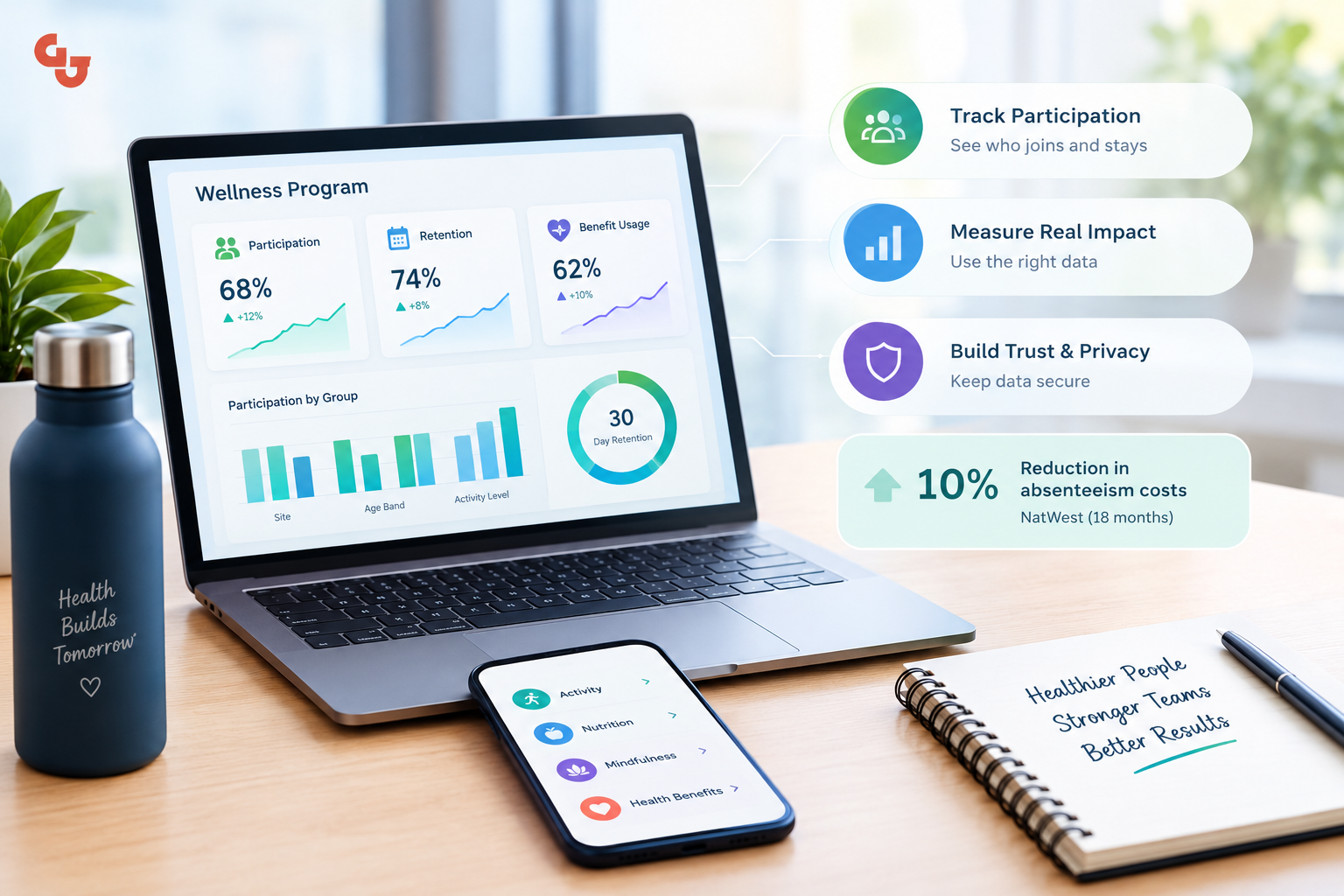
Track who joins, who stays, and which benefits they use afterward. Participation alone can hide a problem: if the same active 20% sign up every year, the budget is rewarding people who needed the least help.
Look at participation by site, age band, and starting activity level. Check 30-day retention. Watch whether employees who join a challenge go on to use the benefits their employer already funds — that is the clearest signal that your incentive design is working as a gateway, not just a reward.
GoJoe contributed to a 10% reduction in absenteeism costs at NatWest in 18 months — an outcome that reflects sustained participation, not just headline enrolment.
Measurement only works if employees trust it, so privacy belongs in the design from day one. Employers see aggregated, anonymised data only. Each employee sees their own results and controls their privacy settings. GoJoe is ISO 27001 certified, GDPR compliant, and HIPAA-aligned.
Where should HR leaders start?
Strong wellness incentives share three traits: they offer choice, they reward small steps often, and they point people toward benefits already paid for. GoJoe's benefit navigation AI, Nightingale, routes each employee to the health benefits their employer already funds — so the incentive and the benefit land in the same place. Start with one pilot group, measure 30-day retention, and adjust before you roll out wider.
The goal is not the biggest prize. It is the smallest reward that gets a new person moving. To see how GoJoe structures incentive design for global enterprise workforces,
GoJoe is the AI-powered health intelligence platform for global enterprise. It brings every health benefit into one place, routes employees to the support they need through Nightingale, and rewards healthier habits across 150+ countries. Find out more aboutGoJoe's corporate wellness programs.
Frequently Asked Questions
What is GoJoe?
GoJoe is the AI-powered health intelligence platform that helps global enterprises know their people better, get more from the benefits they already fund, and build a healthier workforce in every country they operate in. It is a corporate wellness platform that combines benefits navigation, wellness incentive and credit management, health risk assessments, rewards and team challenges in one system, used in 150+ countries.
What is the most effective type of wellness incentive?
No single type wins everywhere. Financial and penalty-based designs show the highest participation numbers in research, but pairing them with recognition and genuine activity choice reaches a wider range of employees including those who were not already active. Small, frequent rewards consistently outperform large, infrequent ones.
Are cash and gift card rewards taxable?
In the US they are generally treated as taxable income. Confirm the details with your tax advisor and legal counsel before launch, and communicate the rules clearly to employees before the programme begins.
How often should employers issue rewards?
Monthly or quarterly cycles usually sustain engagement better than one year-end payout. The closer the reward is to the action, the more clearly employees connect the two. Test the rhythm with a pilot group before rolling out at scale.
How do wellness incentive programmes work across multiple countries?
Tax rules, privacy laws, and reward preferences vary significantly by market. Programmes need local flexibility in reward types, language, and activity options. GoJoe is deployed in 150+ countries and provides each employee with a localised experience including native-language content and market-appropriate reward options.
Can rewards help employees who are inactive today?
Yes, when the first step is small and the activity options go beyond running or gym visits. GoJoe's data shows that 75% of previously inactive users exceed WHO weekly physical activity guidelines during a challenge evidence that inclusive design and the right incentive structure changes behaviour, not just participation numbers.