The role of physical activity in workforce health
Ed is Head of Marketing at GoJoe, helping grow the businesses globally as well as working with clients to support internal engagement.
Physical activity is the most evidence-backed lever an employer has for workforce health. Regular movement improves mood, focus and recovery within days, and over months reduces absence; it is also the lever most workforces fall furthest short on. The WHO recommends 150 minutes of moderate activity a week. Most employees do not reach it, and the ones who do are usually the ones a program least needs to reach. This piece covers what the evidence says, the activity that fits a working day, and why the format matters as much as the message.
What the evidence says
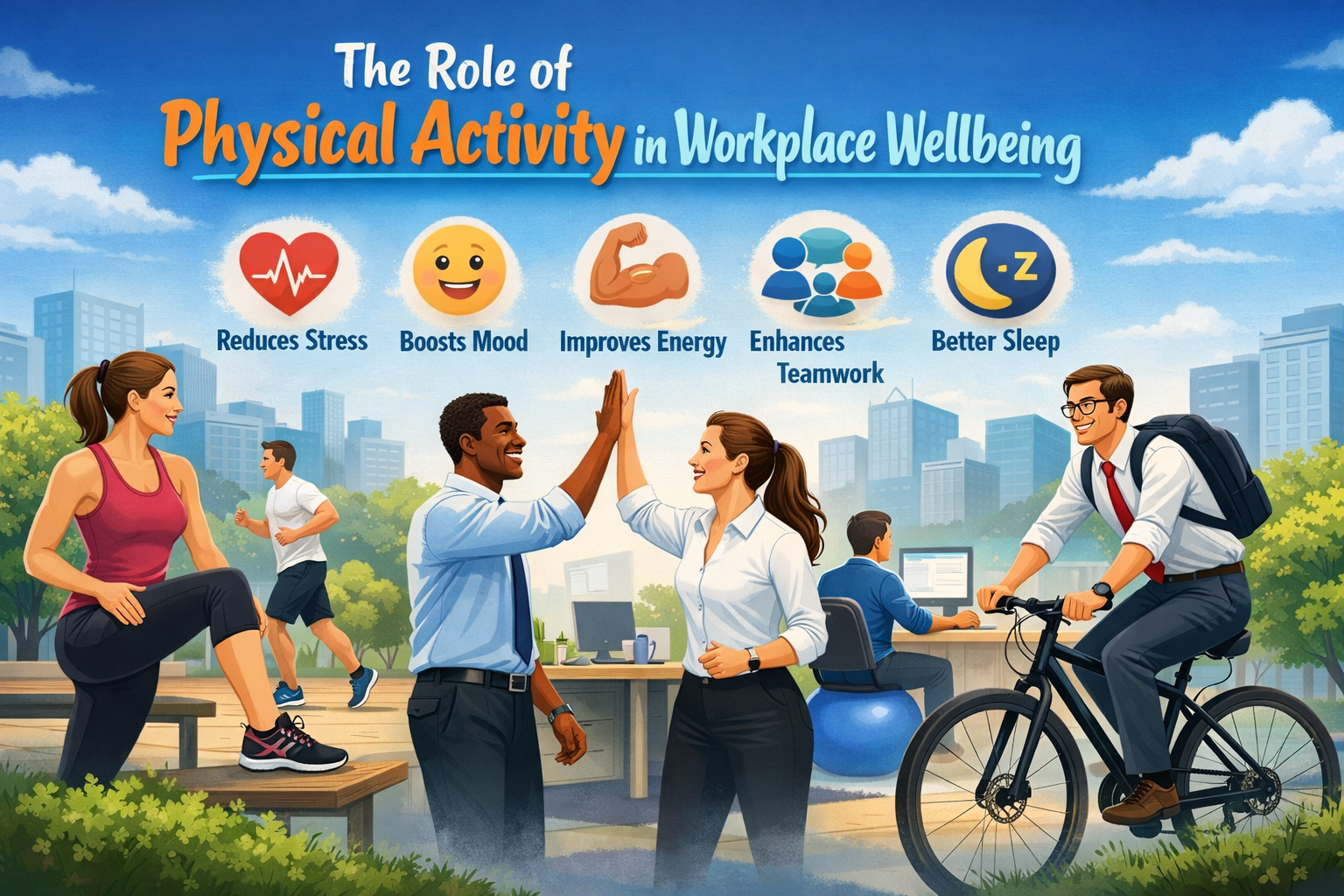
Active employees report better sleep, more energy and better mood, and take fewer sick days than inactive colleagues. Exercise has a measurable effect on anxiety and low mood, which is why GoJoe works with Stanford University researchers on the relationship between physical activity and mental health. The effect compounds: short bursts through the day do more for sustained workplace health than one intense session at the weekend.
Activity that fits a working day
A walk for the first five minutes after a video call. Walking meetings for one-to-ones. Stairs under four floors. Standing for the first and last minute of each hour. A lunchtime walk with colleagues. Active commuting where it is possible. None of these needs a gym, kit or time off, and all of them count toward the weekly guideline.
Why the format decides who takes part
A gym discount or an individual step target reaches the people who were already active. The majority, who are not, need a reason that is not their own willpower. Team-based challenges provide it: a colleague's result depends on yours, effort and consistency score rather than speed, and 80+ activity types count, so a walker and a swimmer compete on equal terms. 75 percent of previously inactive GoJoe users exceed WHO weekly physical activity guidelines during a challenge, and more than 82 percent of employees feel more socially connected after using GoJoe.
Movement and mental health
Movement lowers stress at the source and builds the resilience that absorbs pressure. Combined with the social connection of doing it with colleagues, it addresses the two most evidence-backed drivers of mental health at once. 67 percent of GoJoe users reported better health while remaining productive at work, and 74 percent reported being better able to manage work-life balance.
Measuring the effect
Participation by team and site, activity among previously inactive employees, self-reported health and connection, and absenteeism over 12 to 18 months. GoJoe contributed to a 10 percent reduction in absenteeism costs at NatWest in 18 months.
Frequently asked questions
Why does physical activity matter for workforce health?
Regular movement improves mood, focus and recovery, and over time reduces absence. It is the single most evidence-backed lever an employer has, and the one most workforces fall short on.
How much activity makes a difference?
The WHO recommends 150 minutes of moderate activity a week. Short, regular movement through the day counts toward it and is easier to sustain than long sessions.
How do you get inactive employees moving?
Team-based formats that score effort rather than output. 75 percent of previously inactive GoJoe users exceed WHO weekly physical activity guidelines during a challenge.
See team challenges, or book a demo.