Hyper-Personalised Employee Benefits: The 2026 HR Guide
Ed is Head of Marketing at GoJoe, helping grow the businesses globally as well as working with clients to support internal engagement. Previously, Ed worked for 8 years in comms and marketing for the British Olympic Team and in brand and partnerships for the University of Portsmouth.
Are your employees receiving benefits that meet their needs, or is their benefits plan just an ineffective one-size-fits-all solution nobody uses? Recent data revealed that over 70% of Indian businesses struggled to keep employees interested in their benefits plans by 2025 despite increased employee interest for flexible programs with customized features.
Employee benefit apps have quickly become the foundation of modern HR strategy, helping organizations provide tailored, flexible benefits tailored to each employee's age, life stage, and priorities. Companies are investing more in digital tools that simplify benefits enrollment, tracking, and communication—employee benefit apps are particularly effective solutions in doing so! In this HR guide for 2026 you'll discover how to design hyper-personalized employee benefit programs while app solutions play a pivotal role in maintaining engagement, productivity, and long-term productivity.
Why Hyper-Personalized Employee Benefits Matter in 2026
Today’s employees expect more than a fixed list of perks. They want benefits that align with their lifestyle, family needs, and career goals. Hyper‑personalized packages help you offer tailored options like health insurance, flexible leaves, mental health support, and learning stipends, instead of a one‑size‑fits‑all model. This type of customization boosts engagement, reduces turnover, and makes your organization feel more human and caring.
How Employee Benefit Apps Are Changing HR Practices
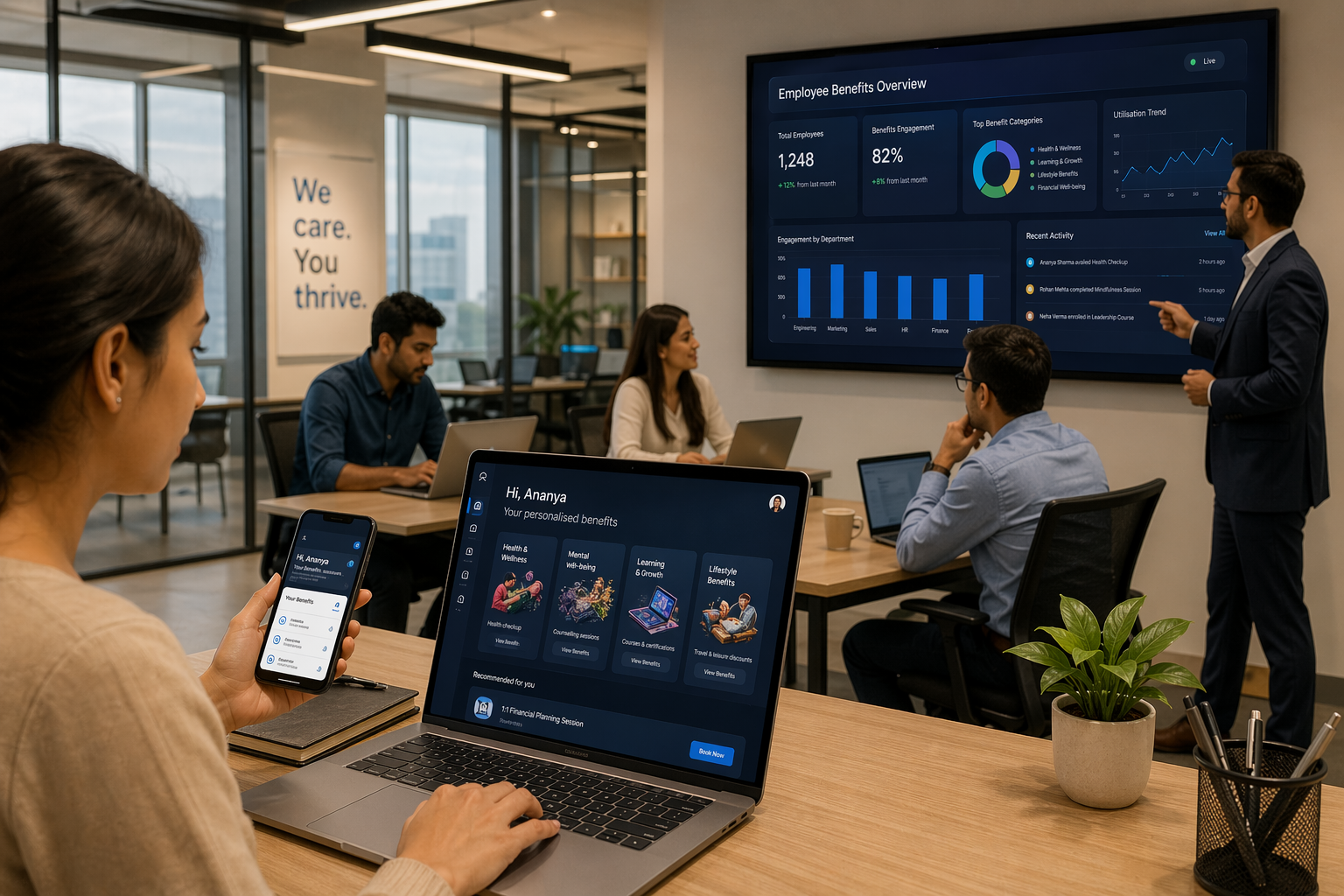
Apps designed specifically to assist HR teams are revolutionizing how HR professionals communicate about, manage, and distribute benefits to employees. Employee benefit apps allow workers to see, select, and keep tabs on everything from health insurance plans to wellness programs in real-time via an employee benefit app—saving HR valuable time while lowering the error rate significantly and giving real-time information regarding who uses services and their satisfaction with them. Employers can make the benefits experience smoother, open, and more interesting through the use of such applications!
Key features to look for:
- Easy onboarding and self‑service access
- Personalised benefit recommendations
- Real‑time notifications and updates
What to Look for in a Corporate Benefits App
A good corporate benefits app should be simple, secure, and mobile‑friendly for all employees. It should support flexible enrollment windows, clear explanations of each benefit, and smooth integration with your payroll or HRIS systems. The app should also respect privacy and follow local data protection norms while giving managers clear dashboards to track adoption and usage.
- Look for custom dashboards and role‑based views
- Ensure it supports multiple languages and device types
- Check if the vendor offers training and ongoing support
Designing a Customised Employee Benefits Corporation App
An employee benefits corporation app should begin with clear goals from its inception, such as who it serves, which problems it solves, and the kind of culture it fosters. You could divide employees into groups based on their job, where they work, or their stage of life and offer them different benefit packages. For example, younger employees might like learning budgets and fitness perks, while parents might need childcare help and flexible hours.
- Use simple forms and clear language
- Let employees compare plans side by side
- Add short videos or FAQs to explain complex policies
Key Benefits of Using an Employee Benefit App for Your Team
Using an employee benefit app makes life easier for everyone. Employees can access their benefits anytime, from any device, without chasing emails or paperwork. HR teams get accurate records, better analytics, and faster adoption of new policies. Overall, the app helps you position your company as modern, caring, and tech‑savvy.
- Faster enrolment and fewer errors
- Higher engagement with wellness programs
- Lower admin workload and cost savings
How to Introduce Employee Benefit Apps Without Confusing Staff
Rolling out a new app can feel overwhelming if you do not explain it well. Start with a clear launch plan, simple training sessions, and short demo videos. Let employees ask questions We can share success stories from early adopters through chats or quick webinars. Gojoe’s employee benefit apps, for example, help companies simplify complex corporate benefits into a clean, user‑friendly interface without extra stress for HR or staff.
Data‑Driven Personalisation: Making Benefits More Relevant
The best employee benefit apps use data to provide suggestions that feel relevant. Instead of showing every perk to everyone, the app can highlight only what fits each person’s role, age, or preferences. For instance, an employee nearing retirement may see more pension and health‑care options, while a new hire gets more focus on learning and growth benefits.
Future Trends in Employee Benefit Apps and HR Tech
By 2026, expect more integration between employee benefit apps, payroll systems, and wellness platforms. AI will help recommend benefits based on behavior and feedback, while mobile‑first designs will support remote and gig‑based workers. As companies in India and abroad invest more in employee well-being, tools like the corporate benefits app and employee benefits corporation app will become standard rather than “nice‑to‑have.”
Frequently Asked Questions (FAQs)
- What is an employee benefit app?
An employee benefit app is a digital platform that lets staff view, choose, and manage their company benefits in one place, from health insurance to wellness programs.
- Why do companies need a corporate benefits app?
A corporate benefits app helps HR reduce paperwork, avoid errors, and improve engagement by making benefits easy to understand and access.
- Can an employee benefits corporation app work for remote teams?
Yes, most modern employee benefits corporation apps are mobile‑first and work smoothly for remote, hybrid, and office‑based employees.
- How do employee benefit apps help with personalization?
They use basic data such as age, role, and location to suggest the most relevant benefits for each employee, instead of showing the same list to everyone.
- Are employee benefit apps secure and compliant?
Good apps follow data protection rules, use encryption, and restrict access so only authorized staff can view sensitive information.
- Will an employee benefit app increase HR workload?
Initially there may be some setup time, but over time the app reduces manual work. phone calls, and email queries for HR teams.
- How do I choose the right corporate benefits app for my company?
Look for ease of use, integration with your payroll or HR system, clear reporting, and strong customer support before deciding.
Final Thoughts
In 2026, employees no longer want generic benefits. They expect personalized, flexible, and easy‑to‑use options that match their real lives. Employee benefit apps, corporate benefits apps, and employee benefits corporation apps are no longer optional extras; they are essential tools for modern HR.
If you want to keep your team engaged, reduce turnover, and build a modern workplace culture, it is time to explore how an employee benefit app can work for your company. Take the first step, compare a few platforms, and start building a benefits experience your employees will actually use and value.