Ed is Head of Marketing at GoJoe, helping grow the businesses globally as well as working with clients to support internal engagement. Previously, Ed worked for 8 years in comms and marketing for the British Olympic Team and in brand and partnerships for the University of Portsmouth.
Quick answer: Modernizing legacy programs starts with an audit, not new tools. Test every activity on three questions: does it reach employees your data flags as at risk, does another vendor already cover it, and does it route people to benefits you already fund? Retire or redesign what fails two tests employee wellness initiatives that reach only the already-active repeat the legacy mistake. Then consolidate the survivors on one platform.
Employee wellness initiatives are employer-funded programs, challenges, benefits, coaching, assessments designed to improve workforce health and reduce the cost of preventable illness. When they work, they reach the employees who need them most. When they do not, they reward the people who were already active and leave the highest-risk employees untouched.
Most large employers did not choose a messy wellness stack.They built it one vendor at a time: a step challenge here, a coaching service there, an assistance program nobody mentions after open enrollment. Today those pieces run across four to nine disconnected vendors, costs keep rising, and nobody can see what any of it changed. This blueprint takes a clear stance: more programs are not the answer. The wellness category runs on slow, legacy technology that counts steps and reaches people who were already fit, and adding another tool to that pile only widens the gap. Executives need a way to decide what to keep, what to merge, and what to drop, backed by data that shows who each program actually serves.
Key Takeaways
• Audit each activity by reach, overlap, and routing before you buy anything new.
• Retire or redesign anything that fails two of the three tests.
• Add participation and benefit-use data by team to your quarterly review.
• Ask vendors for live reporting by country, not an annual summary.
• Run a 90-day pilot with one metric before a company-wide rollout.
Why do legacy employee wellness programs stop working?
Legacy programs stop working because they measure activity, not reach. A step challenge can post strong totals while the employees with the highest health risk never join. Corporate wellness activities built around an annual push and manual reports share one blind spot: leaders see what happened, not who it missed.
Three signs show that your employee wellness initiatives have aged out. Participation clusters among people who were already active. Benefits sit unused because employees cannot find them. And reporting arrives once a year, long after anyone can act on it.
How do you audit employee wellness initiatives before replacing them?
Score each activity on reach, overlap, and routing, then decide whether to keep, merge, or retire it.
Test 1: Does it reach the right people?
Compare who participates against who in your survey and benefit-use data flag as at risk. If the same active employees win every cycle, the activity needs a redesign.
Test 2: Does it overlap with another vendor?
List every vendor and what each one does. Two tools that both run challenges, or three that all offer coaching, signal waste. Overlapping corporate wellness activities also split your data across portals, which hides trends.
Test 3: Does it route people to what you already fund?
Ask whether the activity sends people to employee wellness benefits you already pay for such as the employee assistance program, preventive screenings, or mental health coverage. An activity that ends in itself adds cost without adding access.
This is the Know More step. Health intelligence the use of live and predictive data about a workforce shows leaders where health risk is building in every market, before it shows up as absence or resignation.
How are employers expanding employee wellness benefits in 2026?
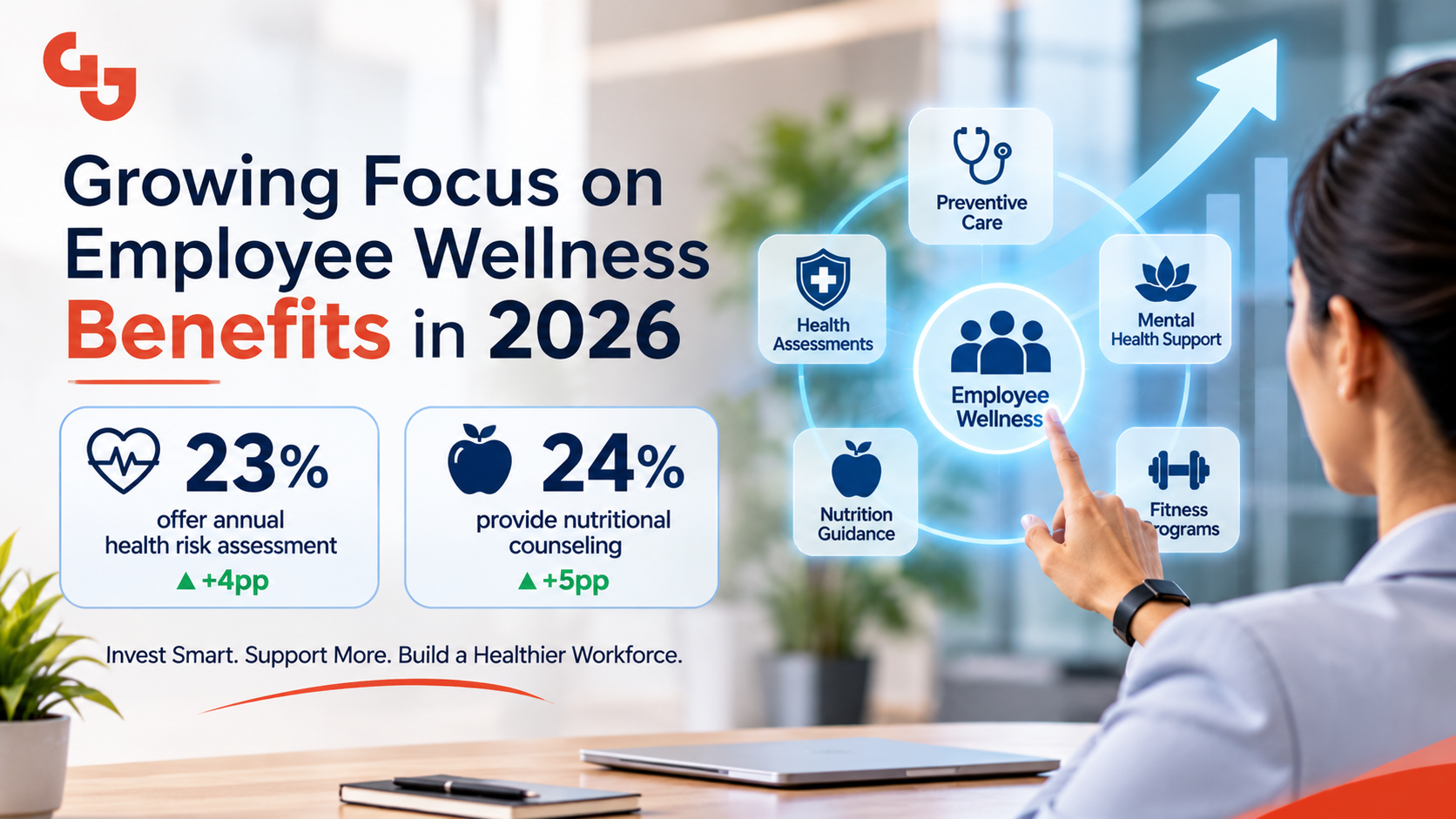
Employers keep adding preventive options. In SHRM's 2026 Employee Benefits Survey: 23% of employers offered an annual health risk assessment, up four percentage points, and 24% provided nutritional counseling, up five points. That growth widens access, but it also sets a trap.Adding more employee wellness benefits without rich data repeats the legacy mistake at a larger scale.
How do you replace point solutions with one platform?
Consolidate where the overlap test shows duplication, and keep any specialist service that passes all three tests. A corporate wellness platform earns its place only if it brings every health benefit into one place, routes people to the help they need, and rewards healthier living.
[Note for Ed to verify before publishing: the original draft referenced 'GoJoe replaced three incumbent vendors with one platform at a Fortune 500 pharmaceutical company.' This stat is not in the approved data statement. If this refers to Abbott, the approved reference is 'a leading global pharmaceutical company' and the consolidation claim needs to be confirmed as approved before use. Placeholder below uses approved language; restore the full stat if verified.]
GoJoe replaced multiple incumbent vendors with one platform at a leading global pharmaceutical company consolidating employee wellness initiatives in a single system and giving leaders one live view of workforce health across every market. GoJoe achieves 80–90% average engagement in organisational challenges, because its weighted system counts 80+ activity types equally. That is what spending smarter looks like.
Challenges and communities give people a reason to start, and rewards keep them going. Swap step-count-only corporate wellness activities for formats that let night-shift, remote, and frontline teams earn credit for what suits them.
What should executives ask vendors before signing?
Bring five questions to every demo:
• Can you show live participation and benefit-use data by team, site, and country?
• How does your platform route employees to benefits we already fund? Does it name the navigation tool and explain how it works?
• Does it work in every country we operate in, in each employee's language?
• What do employers see, and what do employees control?
• What did your last client consolidate, and how long did it take?
Then ask how the vendor measures reach across your employee wellness initiatives, and request a client reference you can call. GoJoe's benefit navigation AI, Nightingale, routes each employee to the health benefits their employer already funds and is developed with Stanford University researchers.
How should leaders handle privacy and employee trust?
Employers see aggregated, anonymized data only. Each employee sees their own results and controls their privacy settings. GoJoe is ISO 27001 certified, GDPR compliant, and HIPAA-aligned.
Put those rules in your launch message, in plain language. Employees engage more honestly when they know exactly what their employer can and cannot see.
What does a 90-day modernization plan look like?
Days 1–30: Run the three-test audit and pull participation and benefit-use data by team.
Days 31–60: Pilot one consolidated approach with a single team at each major site, and name one metric.
Start with the audit. Score every activity on reach, overlap, and routing, retire what fails, and give the survivors one home. Do that, and your employee wellness initiatives stop being a line item you defend every budget cycle and become a program you can show working.
Know More. Spend Smarter. Perform Better.
GoJoe is the AI-powered health intelligence platform for global enterprise. It brings every health benefit into one place, routes employees to the support they need through Nightingale, and rewards healthier habits across 150+ countries. To see how GoJoe can modernize your wellness stack,book a demo.
GoJoe is the AI-powered health intelligence platform that helps global enterprises know their people better, get more from the benefits they already fund, and build a healthier workforce in every country they operate in. It is a corporate wellness platform that combines benefits navigation, wellness incentive and credit management, health risk assessments, rewards and team challenges in one system, used in 150+ countries.
What is health intelligence?
Health intelligence is the use of live and predictive data about a workforce's health, behavior, and benefits to help people get healthier, get more from the benefits they already have, and show employers what is working. GoJoe's health intelligence surfaces workforce health trends in real time not quarterly reports so HR and benefits leaders can act before health risk becomes an absence or a resignation.
How do you measure the value of employee wellness benefits?
Track who uses each benefit, which teams use it, and whether usage rises where you promoted it. Compare participation rates before and after an initiative, and segment by team, site, and starting activity level. If the same 20% of employees engage every cycle, the program is not reaching the people who need it most.
How long does it take to modernize a legacy program?
A focused audit and pilot take about 90 days. Full consolidation retiring redundant vendors, migrating to a single platform, and re-communicating benefits to employees typically takes six to twelve months depending on the number of countries and vendors involved.
Who should own the audit?
A named benefits or total rewards leader should own it, with finance and IT at the table. Finance brings the vendor cost data; IT brings the integration and data-access questions. Without both, the audit produces a list but not a decision.
Can one platform support employees in different countries?
Yes. GoJoe is deployed in 150+ countries and provides each employee with a localized experience, including native-language content and market-appropriate reward options. HR sees one consolidated view of workforce health across every market.