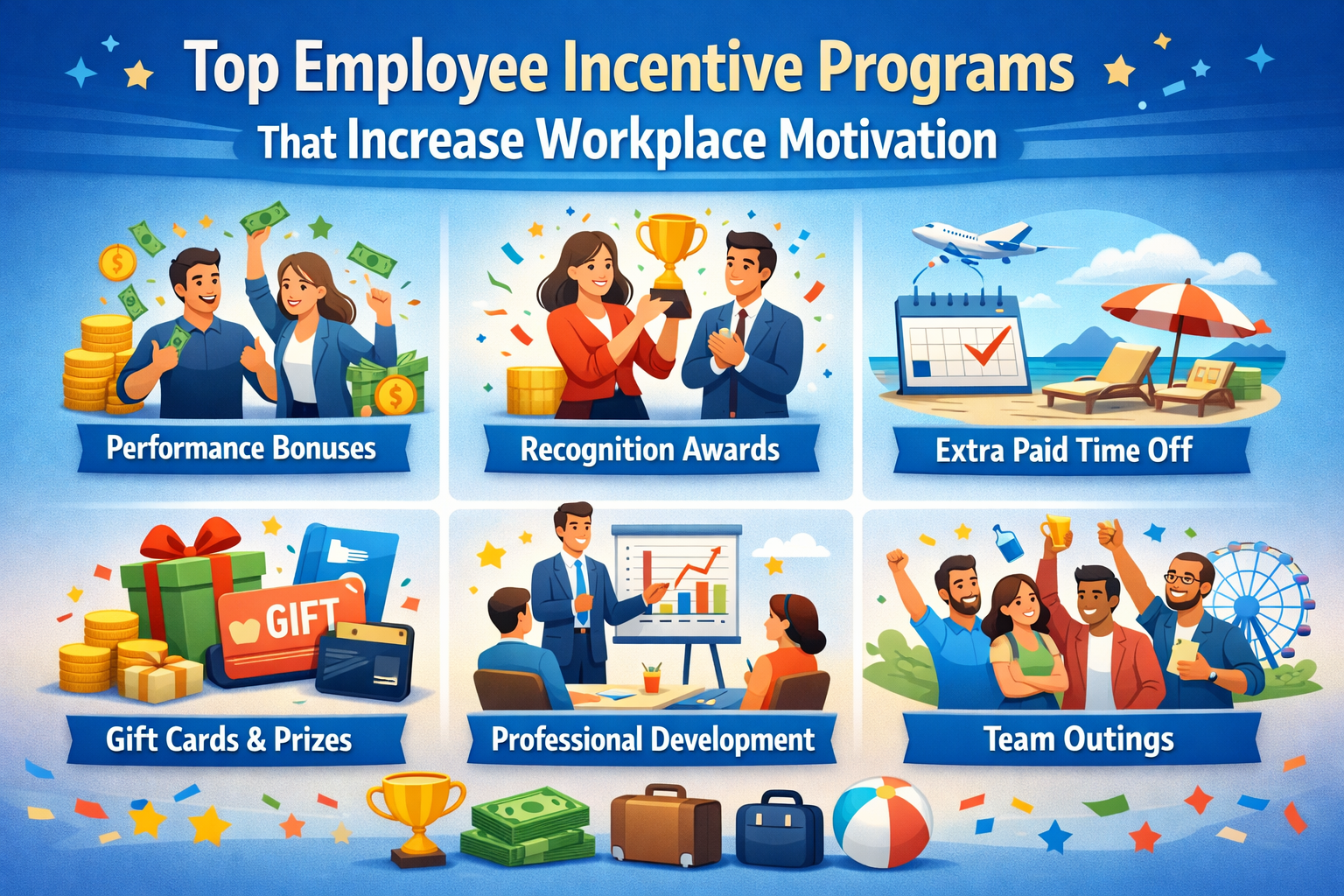
What truly motivates employees? Money matters, but modern research consistently shows it's not the whole story. The best employee incentive programs combine recognition, purpose, health, and rewards into something that makes people want to show up and do their best work.
This guide breaks down what works, what doesn't, and how companies are using wellbeing-based incentive programmes to drive real improvements in performance, retention, and culture.
Why Traditional Incentive Programmes Often Fall Short
Many incentive programmes focus on cash bonuses and gift cards. These have their place, but research shows they rarely sustain long-term motivation. Once the reward is spent, the behaviour reverts. Effective incentives need to tap into intrinsic motivation — the desire to grow, connect, and feel valued.
Gallup's State of the Global Workplace report consistently finds that employee engagement is driven more by recognition, purpose, and belonging than by financial rewards alone. The most successful incentive programmes reflect this.
The Wellbeing Incentive: A Growing Priority for HR Leaders
One of the fastest-growing categories of employee incentive is health and wellbeing. Companies are discovering that investing in employee health drives returns across every business metric — lower absenteeism, higher productivity, better retention, stronger culture.
Platforms like GoJoe translate healthy behaviours directly into tangible rewards. Employees earn points for physical activity, which convert into vouchers for 2,000+ brands via the GoJoe rewards marketplace. This creates a virtuous cycle: movement earns rewards, rewards reinforce behaviour, behaviour improves health and work performance.
The results speak for themselves: 67% of GoJoe users feel more productive at work, and 67% feel more positive about their employer. These aren't just wellness metrics — they're employee engagement metrics.
Types of Employee Incentive Programmes That Work
1. Health and Fitness Challenges
Team-based fitness challenges are one of the highest-engagement incentive formats available. GoJoe's workplace fitness challenges consistently deliver 90% participation rates — numbers most incentive programmes only dream of.
Why do they work? They combine competition, social connection, and tangible rewards. Teams form around a shared goal, progress is visible, and healthy rivalry drives people forward. For HR leaders struggling to engage employees across hybrid or remote setups, a well-run challenge can be transformative.
See our detailed guide on fitness challenge apps for teams for a breakdown of how these programmes are structured.
2. Recognition Programmes
Peer-to-peer recognition is one of the most cost-effective incentives available. When employees can acknowledge each other's contributions in real time, it creates a culture of appreciation that managers alone can't build.
The key is making recognition public, specific, and tied to company values. Generic "great job" messages don't land — specific recognition of how someone helped a colleague, solved a problem, or embodied a value does.
3. Flexible and Lifestyle Benefits
Flexible working, learning budgets, and lifestyle spending accounts (LSAs) have become standard in competitive employers' benefit stacks. GoJoe's platform includes an optional LSA-style rewards mechanism that lets employees spend earned rewards on the categories that matter most to them.
4. Career Development Incentives
Promotions, mentorship, and training opportunities are powerful motivators, especially for high performers. Organisations that create clear progression pathways see significantly better retention.
5. Team and Social Events
Shared experiences — from team away days to virtual social events — build the relationships that underpin motivation. GoJoe's challenge format turns fitness into a team bonding event, with virtual maps, leaderboards, and social feeds keeping colleagues connected throughout.
Designing an Incentive Programme That Sticks
The most effective programmes share a few characteristics:
They're inclusive. If only the fittest, most competitive, or highest earners can benefit, you've excluded the majority. GoJoe's weighted activity system ensures someone doing yoga counts alongside someone running marathons.
They're visible. Incentives that happen quietly don't drive culture. Leaderboards, social feeds, and manager shoutouts make participation visible and socially reinforcing.
They're tied to something people care about. Vouchers for brands people actually use, recognition that lands with colleagues, challenges that relate to team identity — the more personal, the more powerful.
They're measured. The best programmes track participation, health outcomes, and business metrics side by side. GoJoe's data platform, developed in partnership with Stanford University, gives HR leaders exactly that.
The Business Case for Wellbeing-Based Incentives
Consider the numbers from organisations already running GoJoe:
- One company reduced absenteeism costs by 10% after launching a GoJoe challenge programme
- Another reversed a 15-month trend of increasing sick days within a single challenge cycle
- 75% of previously inactive employees exceeded WHO recommended exercise guidelines
- 70% of users reported improved physical, mental, and social wellbeing within 14 days
When you frame wellbeing incentives as an investment rather than a cost, the ROI is clear. Read more about the best employee wellness platforms and how they deliver measurable returns, or explore our guide to high-engagement wellness programmes.
Frequently asked questions
1. What are the most effective employee incentive programs?
The most effective employee incentive programs combine financial rewards with recognition, wellbeing initiatives, career development, and team-based experiences. Incentives that encourage healthy habits, collaboration, and personal growth tend to deliver higher long-term employee engagement than cash rewards alone.
2. How do employee incentive programs improve workplace motivation?
Employee incentive programs increase workplace motivation by recognising achievements, encouraging healthy competition, rewarding positive behaviours, and creating a stronger sense of purpose. Programmes that include team challenges and wellbeing activities also strengthen workplace culture and collaboration.
3. What types of employee rewards increase engagement?
Employee rewards that consistently improve engagement include wellness incentives, gift vouchers, peer recognition, flexible benefits, learning opportunities, extra time off, and team experiences. Offering employees meaningful rewards they value helps maintain long-term participation.
4. Why are wellbeing-based incentive programs becoming more popular?
Wellbeing-based incentive programs improve both employee health and business performance. They help reduce absenteeism, increase productivity, strengthen team relationships, and improve employee retention while encouraging healthier daily habits.
5. How can companies measure the success of an employee incentive program?
Success can be measured by tracking employee participation, engagement rates, retention, absenteeism, productivity, wellbeing improvements, and employee feedback. Many organisations also use analytics dashboards to calculate programme ROI over time.
6. Are employee incentive programs suitable for remote and hybrid teams?
Yes. Modern employee incentive platforms support remote, hybrid, and global workforces through virtual challenges, digital rewards, social features, and online recognition tools that keep employees engaged regardless of location.
7. What should businesses look for in an employee incentive platform?
Businesses should evaluate employee engagement rates, reward options, reporting capabilities, ease of implementation, customisation, scalability, inclusivity, and integrations with existing HR and wellbeing systems before selecting an employee incentive platform.
Getting Started: What to Look For in an Incentive Platform
When evaluating employee incentive platforms, ask:
- What are typical engagement rates? (GoJoe averages 90% during challenges)
- How inclusive is the programme across different fitness levels, ages, and locations?
- What does the rewards catalogue look like? Are they brands your employees actually want?
- Can you customise challenges and branding to your company culture?
- What reporting is available? Can you demonstrate ROI to senior stakeholders?
If you're ready to build an incentive programme that drives engagement, improves health, and shows up in your retention and productivity numbers, chat to the GoJoe team to explore what's possible.