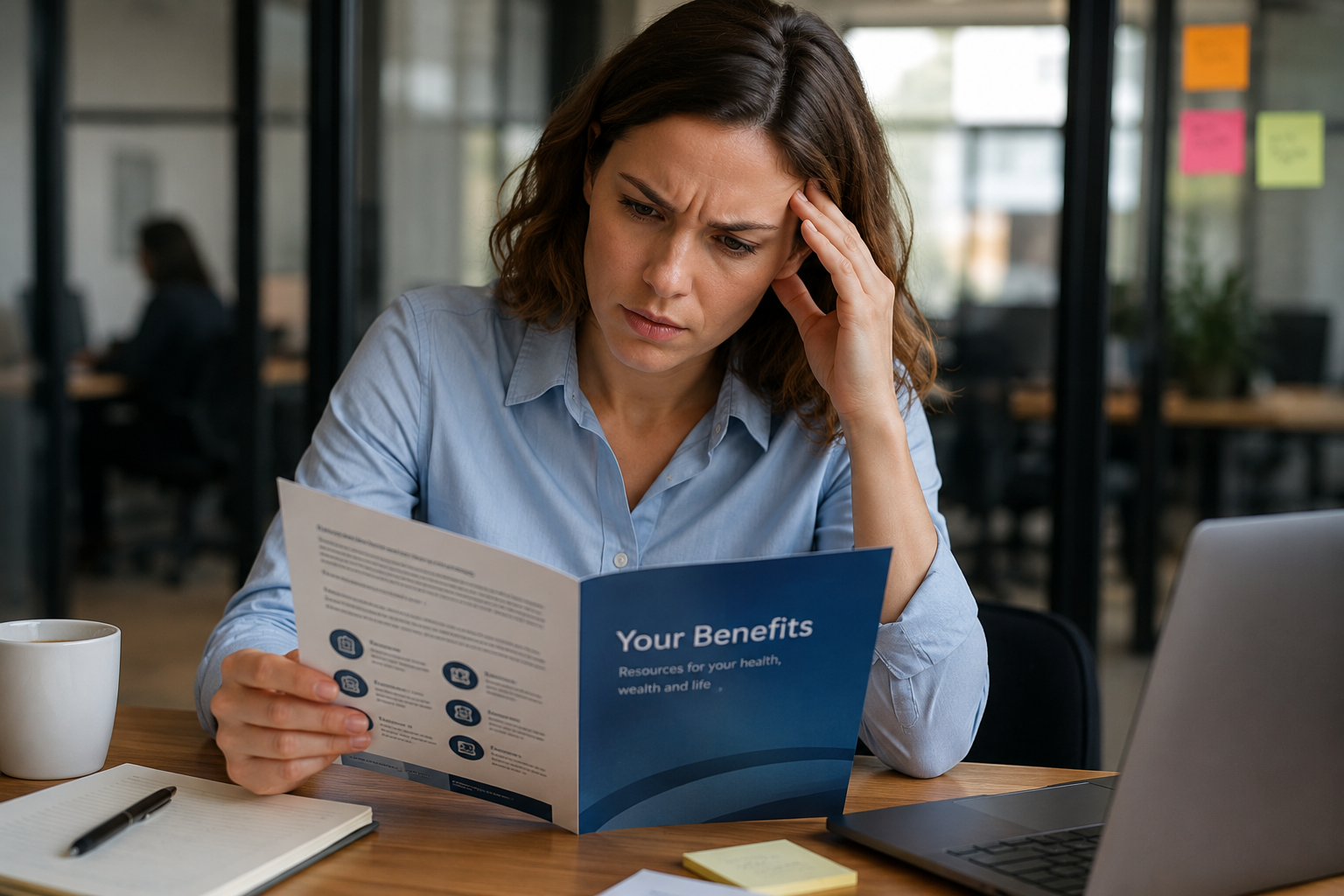
One of the reasons employees fail to comprehend work benefits fully is that the information about the benefits is scattered, complicated, presented at the wrong time, or not in line with one's daily work habits. When people cannot see the value of what they already have access to, benefits become invisible rather than influential. That matters because underused benefits lower engagement, reduce perceived compensation value, and weaken retention. An employee benefits app that is well-designed can bridge this gap by figuring out ways to make benefits more accessible, understandable, and, most importantly, usable to employees. Research and platform data continue to indicate that higher engagement with workplace support correlates with improved wellbeing and business results that can be measured.
Key Takeaways
- Often, employees do not understand their benefits well simply because the employer reaches out only at onboarding or enrollment times.
- Too much complexity discourages people from taking part, even if very good benefits are in place.
- Being visible and interacting with people on a day-to-day basis lead to the increased value.
- A decent online interface can make employee benefits a new work culture rather than a mere old document.
- Changing benefits into well-used and well-understood offers is usually accompanied by increased productivity, wellbeing and lower absenteeism in these companies.
Why Workplace Benefits Are Often Misunderstood From Day One
Many employers assume that offering benefits automatically creates value. Employees experience something different.
Benefits packages now include healthcare, wellbeing tools, rewards, flexible work options, learning programs, and financial support. But employees are typically introduced to all of it at once during onboarding or annual enrollment.
Research continues to show a communication problem. A survey highlighted that 73% of employees wanted more education about company benefits, while a meaningful portion reported feeling only slightly informed or not informed at all.
The issue is rarely lack of investment. More often, it is information overload.
When employees cannot answer simple questions such as:
- What benefits do I have?
- When should I use them?
- Where do I access them?
- How do they help me personally?
workplace benefits stop feeling real. Instead, it becomes another item that needs to be ticked off within the confines of an HR portal and not something that is truly beneficial to employees and integrated into their professional lives.
Employees Use What They Understand and Ignore What They Don’t
Employees rarely reject benefits intentionally. They ignore what feels confusing.
That creates a hidden cost. Companies may spend heavily on programs while employees continue feeling unsupported.
This is where modern platforms are changing expectations. According to data published by GoJoe, enterprise programs delivered measurable outcomes including an 18% increase in self reported productivity, a 40% reduction in employees reporting stress or overwhelm, and engagement levels reaching 2 to 3 times the typical industry benchmark of 10–15%.
The lesson is not that people need more benefits.
They need clearer pathways to use them.
A corporate benefits app that is intricately designed will provide employees with a step-by-step guide for benefit utilization from awareness to action by centralizing access, simplifying communication, and creating regular touchpoints.
Why Traditional Benefits Communication No Longer Works
Earlier, most of the communication was done through PDFs, HR portals, annual enrollment sessions, and long policy documents.
Employees now expect workplace experiences to work more like consumer apps:
- Personalized reminders
- Simple navigation
- Real time access
- Mobile first experiences
- Clear explanations
When benefits are buried behind multiple systems, adoption drops.
Digital delivery matters because employees engage in small moments throughout the week rather than in one annual event.
That is one reason organizations increasingly evaluate employee benefit apps as part of broader employee experience strategies.
An Employee Benefits App Changes Benefits From Information Into Behavior
A modern employee benefits app does more than host documents.
It creates repeated interaction.
Reminders are sent to employees, they are invited to register for programs, they can monitor their progress, and they can make connections between benefits and outcomes that are important to them.
Data published by GoJoe shows average engagement rates above 90% in corporate challenge environments and reports that users experience meaningful improvements in wellbeing and employer sentiment when participation becomes continuous rather than occasional.
That shift matters because workplace value is increasingly judged by experience, not availability.
Benefits employees remember are benefits employees use.
Better Benefit Understanding Creates Measurable Business Results
When employees understand benefits, organizations gain more than participation numbers.
Clearer usage often supports:
- Higher engagement
- Lower absenteeism
- Improved productivity
- Stronger retention
- Better employee perception of total compensation
One example shared by GoJoe reported a 10% reduction in absenteeism costs at NatWest Group over an 18 month period through sustained engagement and health focused participation models.
The point is bigger than technology.
Employees who understand support systems are more likely to believe the organization supports them.
Conclusion
Employees do not misunderstand workplace benefits because they do not care. They misunderstand them because the experience around benefits has not kept pace with how people consume information today.
Organizations that simplify access, explain value clearly, and create ongoing interaction give employees a better chance to use what already exists. The right employee benefit apps can turn overlooked programs into meaningful experiences, while a thoughtful corporate benefits app strategy helps companies protect the investment they already make in their people.
For teams exploring how engagement and wellbeing can work together, GoJoe provides one example of how organizations are making benefits easier to discover and use.
FAQ's
Q1. Why is it common for employees to get distracted from their workplace benefits?
Ans: Generally, most of the benefits of work are given to employees for the first time during the process of employment and hardly ever re-discussed. The use of benefits without reminders or easy availability, employees get stopped to think about benefits.
Q2. What factors contribute towards making workplace benefits more comprehensible?
Ans: Simplified language, single source of information, mobile-friendly platforms, and regular updates to the employees are some of the factors that lead to better understanding and higher usage of the benefits.
Q3. What difference will a worker's benefits application make to their level of participation?
Ans: By doing so, it makes ongoing interactions instead of enrollment experience which is one-time only, thus, guiding workers to uncover and make use of the programs that are available to them on a regular basis.
Q4. Can employee benefits be a factor in productivity?
Ans: Studies and platform data indicate that employees who are more involved in wellbeing and support programs report better productivity and lesser stress.
Q5. What are the features of a benefits platform that organizations should focus on?
Ans: Some of the best indications of success largely depend on the simplicity of use, ability for setting personalization, availability of communication tools, getting analytics, and employee adoption rates.